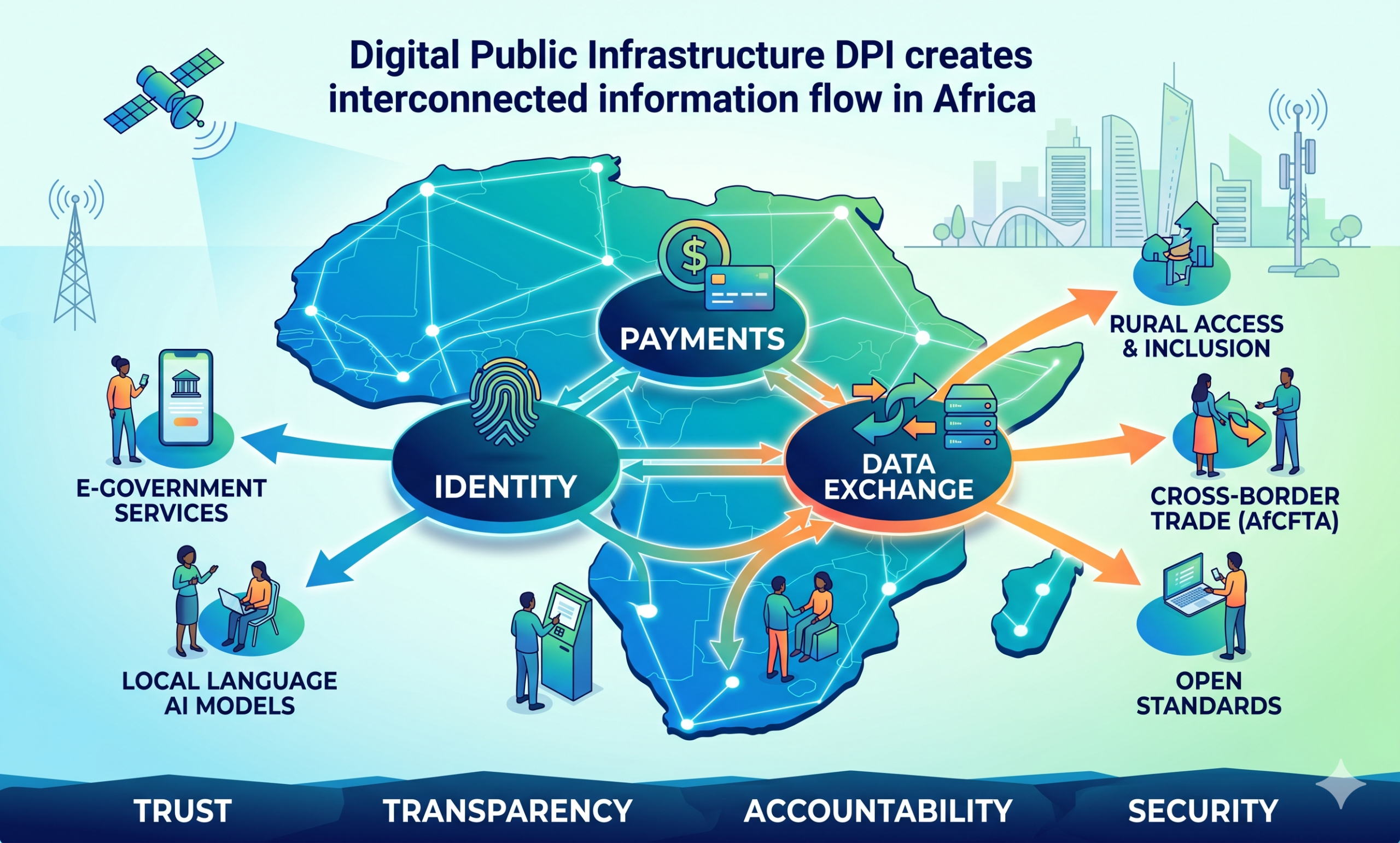
The term Digital Public Infrastructure (DPI) is transforming from development jargon to a global buzzword. At its heart, DPI is about creating powerful, interconnected systems that include digital identity, digital payments, and data exchange—with mechanisms to ensure citizens can control and consent to the use of their data. When these elements work in harmony, backed by robust privacy and governance frameworks, the impact can be monumental. And nowhere is this potential more evident than in Africa.
Africa’s Bold Steps Towards DPI
Africa is no stranger to innovation, and its efforts to scale DPI are testament to that. Countries across the continent are aggressively building National Backbone Infrastructure and embracing E-government projects. Take Uganda’s NBI/EGI initiative or Ghana’s ambitious ‘e-Transform’ program—clear examples of how African nations are laying the groundwork for a digital revolution.
Complementing these efforts, nations like Kenya, Rwanda, Senegal, Sierra Leone, and Uganda are crafting legislation, policies, and ICT master plans to accelerate digital transformation. While policies alone don’t guarantee success, they offer a powerful invitation for collaboration, signaling that Africa is ready to lead.
Closing the Identity Gap: A Game Changer for Services
Digital identity is more than a technical achievement; it’s a lifeline. Of the 850 million people worldwide without official identification, a staggering 65%—or 550 million—are in Africa. Yet, African nations are tackling this challenge head-on.
Continental initiatives by UNECA and the African Union, combined with national programs, are making strides in identity access. Rwanda’s national ID system, for instance, has been the backbone of its Irembo e-government portal, which allows citizens to pay for services like health, education, and land registration online. Irembo has slashed bureaucracy, replacing long queues with efficiency. Inspired by Rwanda’s success, countries like Kenya, Uganda, and Tanzania are pursuing similar initiatives.
The Digital Payments Revolution: Africa Leads the Way
If you think of Africa as a follower in tech, think again. Africa is a global leader in digital payments. Nearly 70% of global mobile money transactions now originate on the continent. Fintech innovation is thriving, with agent banking, mobile wallets, and digital credit reshaping financial access even in remote areas.
A McKinsey survey highlights competition and infrastructure development as driving forces behind this boom. Telecoms, banks, and fintechs are racing to offer innovative solutions, making digital payments accessible across socioeconomic divides. While countries like Kenya, Nigeria, South Africa, and Egypt dominate, others such as Côte d’Ivoire, Senegal, and Uganda are quickly catching up.
Data Exchange: Unlocking Collaboration and Efficiency
Data exchange remains an evolving frontier, but its potential is clear. Uganda’s UGHub, for instance, is a beacon of what’s possible—a platform connecting over 100 government agencies and private entities to securely share data and streamline public service delivery. Similarly, Ghana is laying the groundwork for its own data-sharing ecosystem, aiming to democratize access to information.
These systems are not just about efficiency; they’re about empowering citizens and creating trust between governments and the governed.
Challenges and Opportunities Ahead
Africa’s digital transformation is not without hurdles. Persistent gaps in internet access, infrastructure limitations, and governance challenges must be addressed. Yet, these challenges are matched by enormous opportunities. With a growing commitment to local investment and policy innovation, Africa is proving that DPI can be a game-changer.
Rather than waiting for perfect conditions, stakeholders must seize the moment. The time is now to partner, innovate, and unlock the transformative potential of DPI to improve lives across the continent.
Africa isn’t just catching up; it’s redefining what’s possible in the digital age. Let’s build the future together.