For most of independent Africa, information lived in rooms. Births sat in ledgers. Land sat in dusty files. A hospital record travelled only as far as a clerk could carry it. A trader crossing from Kigali to Kampala carried photocopies and hope. The state knew people through stamps. People knew the state through queues.
That architecture is being replaced, unevenly and sometimes roughly, by digital public infrastructure: identity systems, payment rails and data-exchange platforms that decide who can be seen, what can move, and which facts a government will accept as true.
The first change is the simplest. A person who can prove who they are can enter systems that used to lock them out. Nigeria’s National Identification Number now covers well over 100 million people and is used more than a million times a day to verify customers for banks, mobile operators and public agencies. Ethiopia’s Fayda identity programme is doing the same work in a country where millions of adults once had no official paper at all. Rwanda’s biometric register already covers nearly every adult. Once an identity exists in a machine, other records can attach to it: a school place, a clinic visit, a welfare payment, a SIM card, a bank account.
That attachment is the real story. Information used to be trapped inside ministries. A birth certificate did not talk to a tax file. A hospital did not talk to a social grant office. Platforms such as Kenya’s eCitizen, Rwanda’s Irembo, Uganda’s UGHub and Tanzania’s Jamii X-Change were built to break that silence. A citizen no longer has to act as a courier between offices, carrying a file from one counter to the next. The file moves. The person waits less.
The effect on public information is practical, not abstract. When governments can match identity to payment, they can pay teachers and pensioners without leaking cash through ghost names. When clinics can pull a verified record, a patient is less likely to restart treatment from scratch after moving districts. When a small exporter can present a trusted digital credential at a border, the paperwork that once delayed a consignment becomes a query rather than a negotiation. AfCFTA officials now talk about this openly: trade data that can be verified across borders is as important as the goods themselves.
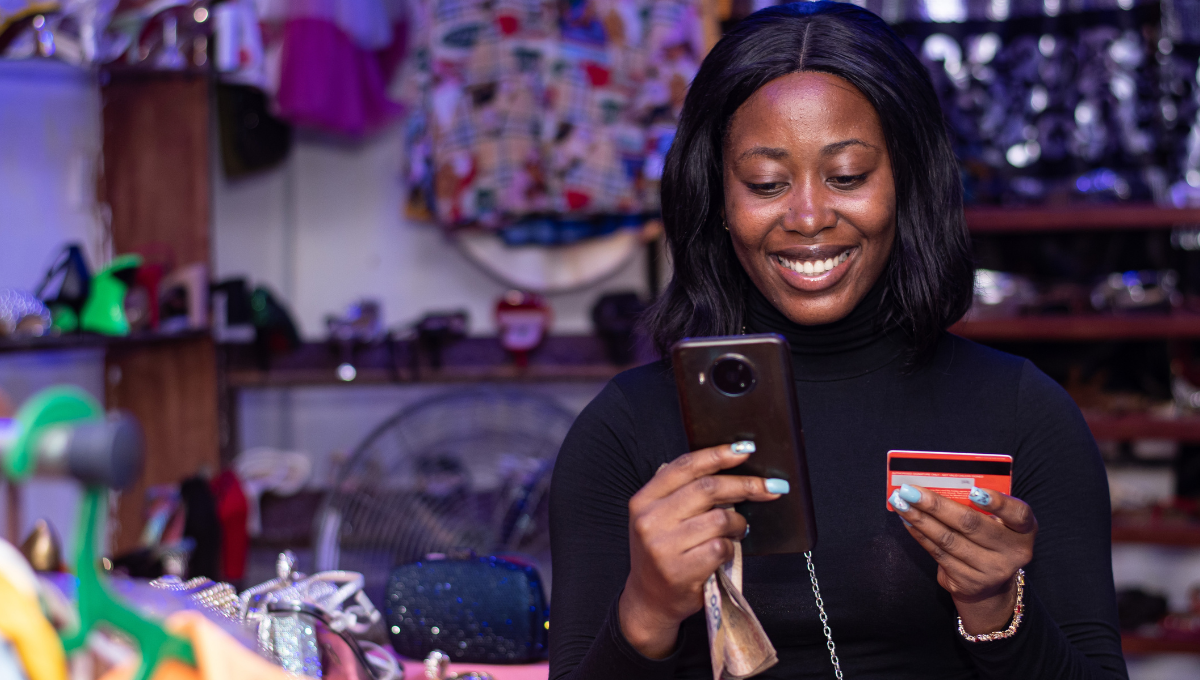
Payments have become an information system of their own. Africa already runs the world’s densest mobile-money networks. Transaction histories, once dismissed as noise, are turning into credit files for people the banks never counted. A shopkeeper in Accra or a farmer outside Nakuru can now show a trail of receipts that used to exist only in a notebook. That is information with consequences. It decides who gets a loan, who can insure a harvest, who can be paid by a government without standing in a hall for a day.
There is a harder side. Systems that make people visible also make them countable. Researchers at the Institute of Development Studies and African digital-rights groups have documented the other half of the story: millions still cannot enrol because they lack documents, live far from registration centres, have disabilities that biometric machines mishandle, or simply do not trust the state with a fingerprint. In some countries, access to voting, school, healthcare or a grant now depends on a digital credential that a person cannot obtain. Information that should be a right becomes a gate.
Privacy law has not kept pace with the pipes. A data-exchange platform that lets a hospital talk to a welfare office can also let a police agency look where it should not. Citizens are asked to trust systems whose rules they cannot read and whose operators they cannot easily challenge. The journalists who cover these projects still lean too heavily on official briefings. The people locked out of the new ledgers rarely appear in the copy.
Even so, the direction of travel is clear. Africa is moving from information as paper to information as infrastructure. The question is no longer whether digital identity, payments and data sharing will reshape what the continent knows about its people. They already have. The question is whether the new records will include the people who never made it into the old ones.