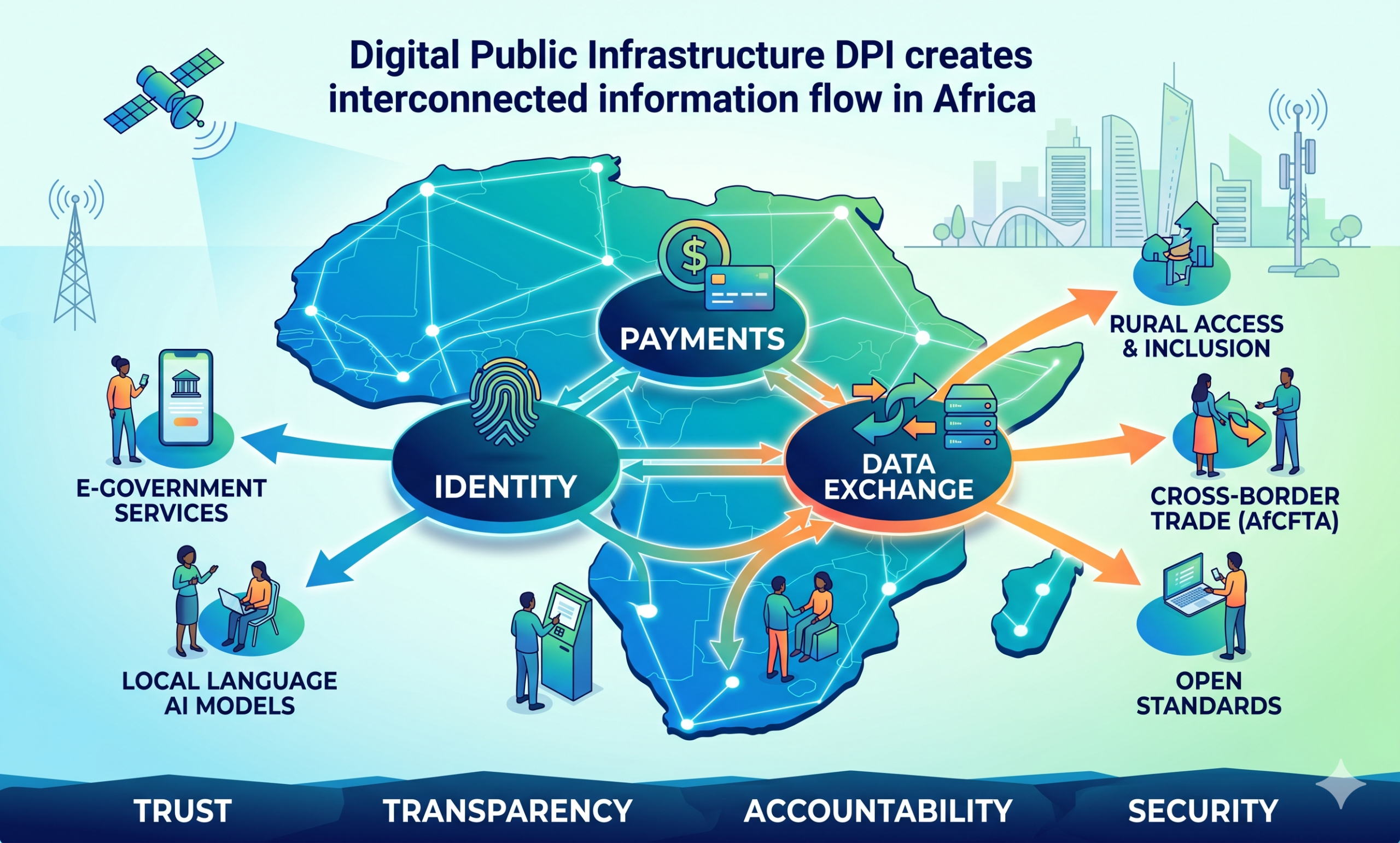
Despite the advancements in Digital Public Infrastructure (DPI) across Africa, several challenges hinder its widespread adoption and effectiveness. This article explores these challenges and discusses potential solutions to overcome them.
- Connectivity and Infrastructure: Many regions in Africa still lack reliable internet connectivity and essential infrastructure. This digital divide exacerbates existing inequalities, particularly between urban and rural areas. Investment in expanding internet access and upgrading infrastructure is crucial. Governments and private sector players must collaborate to build and maintain robust digital infrastructure, including high-speed broadband networks, data centers, and public Wi-Fi hotspots.
- Digital Literacy: Low levels of digital literacy pose a significant barrier to the effective use of DPI services. Educating citizens on how to use digital tools and services is essential for maximizing the benefits of DPI. Initiatives to improve digital literacy through training programs, workshops, and educational campaigns are needed. Governments, educational institutions, and non-governmental organizations (NGOs) can play a pivotal role in promoting digital literacy and ensuring that citizens have the skills needed to navigate the digital world.
- Affordability: The high cost of internet access and digital devices limits the ability of many Africans to benefit from DPI. Reducing these costs is crucial for broader adoption. Governments can implement policies to lower the cost of internet services, such as reducing taxes on telecommunications equipment and encouraging competition among service providers. Subsidies and financing options can also help make digital devices more affordable for low-income households.
- Privacy and Security: Ensuring the security and privacy of digital systems is vital. Concerns about data breaches and misuse of personal information can undermine trust in DPI services. Robust cybersecurity measures and data protection regulations are necessary to build and maintain public trust. Governments must establish and enforce comprehensive data protection laws, while organizations should implement best practices for data security, such as encryption, regular security audits, and user education.
- Regulatory and Policy Frameworks: Inconsistent or outdated regulatory and policy frameworks can impede the development and implementation of DPI. Harmonizing regulations across countries and regions can facilitate smoother DPI integration. Policymakers must create and enforce laws that support digital transformation. Regional organizations, such as the African Union, can play a crucial role in promoting regulatory harmonization and fostering cooperation among member states.
By addressing these challenges, African countries can unlock the full potential of DPI and ensure that its benefits are widely shared. Collaborative efforts between governments, the private sector, and civil society are essential for overcoming these obstacles and driving digital transformation across the continent.