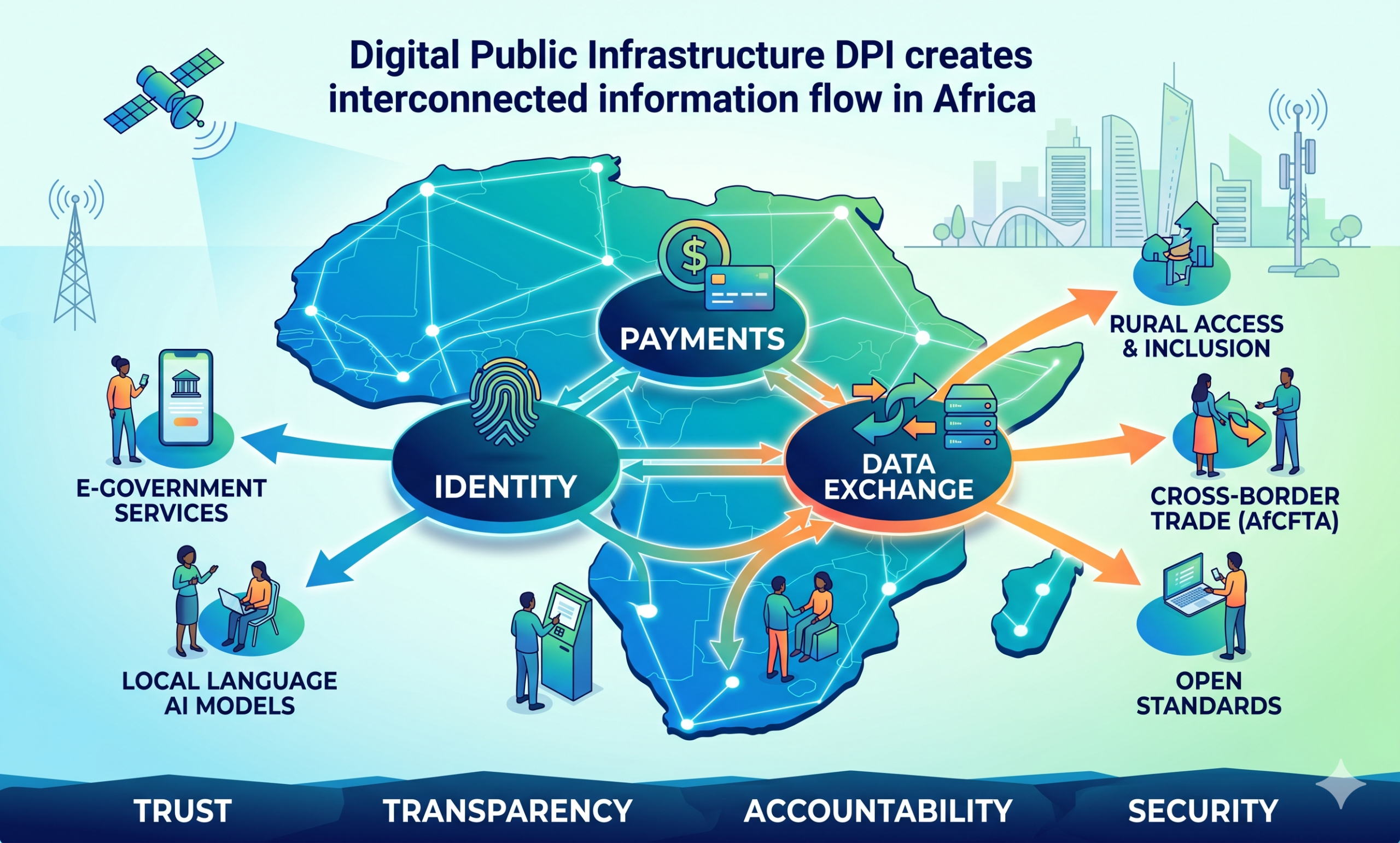
The Role of Digital Data Exchange Systems in Africa’s Digital Public Infrastructure
Digital Data Exchange Systems are critical components of Digital Public Infrastructure (DPI) in Africa, revolutionizing how data is shared, managed, and utilized across various sectors. These systems facilitate seamless data flow between government agencies, businesses, and citizens, ensuring more efficient and transparent service delivery. This post delves into how Digital Data Exchange Systems are transforming Africa, their impact on different sectors, and the future potential of these technologies.
The Importance of Digital Data Exchange Systems
Digital Data Exchange Systems enable the secure and efficient transfer of data across different platforms and entities. These systems are vital for enhancing interoperability, improving data accuracy, and ensuring that information is readily accessible when needed. In Africa, where data fragmentation and inefficiencies in information sharing have historically hindered progress, Digital Data Exchange Systems offer a path to more cohesive and effective governance and service delivery.
How DPI Supports Digital Data Exchange Systems
- Interoperability and Integration: DPI provides the infrastructure needed for different digital systems to communicate and share data seamlessly. This interoperability is crucial for integrating various government databases, health records, financial systems, and other critical data repositories. By enabling different systems to work together, DPI ensures that data can flow freely and securely across different sectors.
- Enhanced Data Security and Privacy: DPI incorporates advanced security measures to protect data during exchange processes. Encryption, secure data channels, and robust authentication protocols ensure that sensitive information is safeguarded against unauthorized access and breaches. This builds trust among users and encourages wider adoption of digital data exchange systems.
- Real-Time Data Access: With DPI, data can be accessed and shared in real-time, enabling quicker decision-making and more responsive service delivery. For example, real-time data exchange between healthcare providers can lead to better patient outcomes, while real-time financial data sharing can enhance the efficiency of banking and payment systems.
- Improved Efficiency and Reduced Costs: Digital Data Exchange Systems reduce the need for manual data entry and paper-based processes, leading to significant time and cost savings. Automated data transfer reduces errors and enhances the accuracy of information, making processes more efficient and reliable.
Impact of Digital Data Exchange Systems on African Communities
The implementation of Digital Data Exchange Systems has transformative effects on various sectors in Africa:
- Healthcare: In the healthcare sector, Digital Data Exchange Systems enable the sharing of patient records between different healthcare providers and facilities. This ensures continuity of care, reduces duplication of tests and procedures, and improves overall healthcare delivery. For instance, a patient’s medical history can be accessed by any authorized healthcare provider, facilitating timely and accurate treatment.
- Financial Services: In the financial sector, these systems facilitate the secure exchange of financial data between banks, payment processors, and regulatory bodies. This enhances the efficiency of financial transactions, improves regulatory compliance, and supports the development of inclusive financial ecosystems. For example, cross-border payments and remittances become faster and more secure.
- Government Services: Government agencies can use Digital Data Exchange Systems to share data across departments, improving the delivery of public services. For example, data from the national ID system can be seamlessly integrated with social welfare programs, ensuring that benefits reach the right individuals without delay. This integration supports more efficient and transparent governance.
- Education: In education, data exchange systems can connect various educational institutions, enabling the sharing of student records, academic credentials, and research data. This facilitates student mobility, academic collaboration, and the efficient management of educational resources.
Case Studies and Success Stories
Several African countries have successfully implemented Digital Data Exchange Systems, showcasing their potential to drive progress:
- Kenya: The Integrated Population Registration System (IPRS) consolidates data from various government databases, providing a single source of truth for citizen information. This system enhances the accuracy and efficiency of service delivery across multiple government departments.
- Rwanda: The Rwanda Health Management Information System (RHMIS) integrates health data from different sources, enabling real-time data sharing and analysis. This system supports better health outcomes through improved data-driven decision-making.
- Ghana: The Ghana Interbank Payment and Settlement Systems (GhIPSS) facilitates secure and efficient financial data exchange between banks and payment service providers. This system has significantly enhanced the country’s financial infrastructure and promoted financial inclusion.
Future Directions and Recommendations
To fully realize the potential of Digital Data Exchange Systems in Africa, the following steps are essential:
- Continued Investment in DPI: Governments and private sector partners should continue to invest in the development and expansion of digital infrastructure to support data exchange systems. This includes enhancing broadband connectivity and building secure data centers.
- Strengthening Data Governance: Robust data governance frameworks are necessary to ensure data quality, security, and privacy. Governments must establish and enforce policies that protect data while enabling its effective use.
- Promoting Interoperability Standards: Developing and adopting common interoperability standards is crucial for seamless data exchange across different systems and platforms. This will ensure that data can be easily shared and utilized by various stakeholders.
- Building Capacity: Training and capacity-building programs for data management professionals are essential to support the effective implementation and use of digital data exchange systems. This includes educating government officials, healthcare providers, financial institutions, and other key players.
- Encouraging Public-Private Partnerships: Collaboration between the public and private sectors can drive innovation and investment in digital data exchange systems. Public-private partnerships can leverage the strengths of both sectors to build robust and scalable solutions.
Digital Data Exchange Systems, supported by robust Digital Public Infrastructure, are transforming the way data is managed and shared across Africa. By enabling secure, efficient, and real-time data exchange, these systems enhance service delivery, improve governance, and drive socio-economic development. As African countries continue to invest in and expand their DPI, the future holds great promise for a more connected, efficient, and prosperous continent. Digital Data Exchange Systems are not just technological advancements; they are catalysts for building a better, more inclusive Africa.