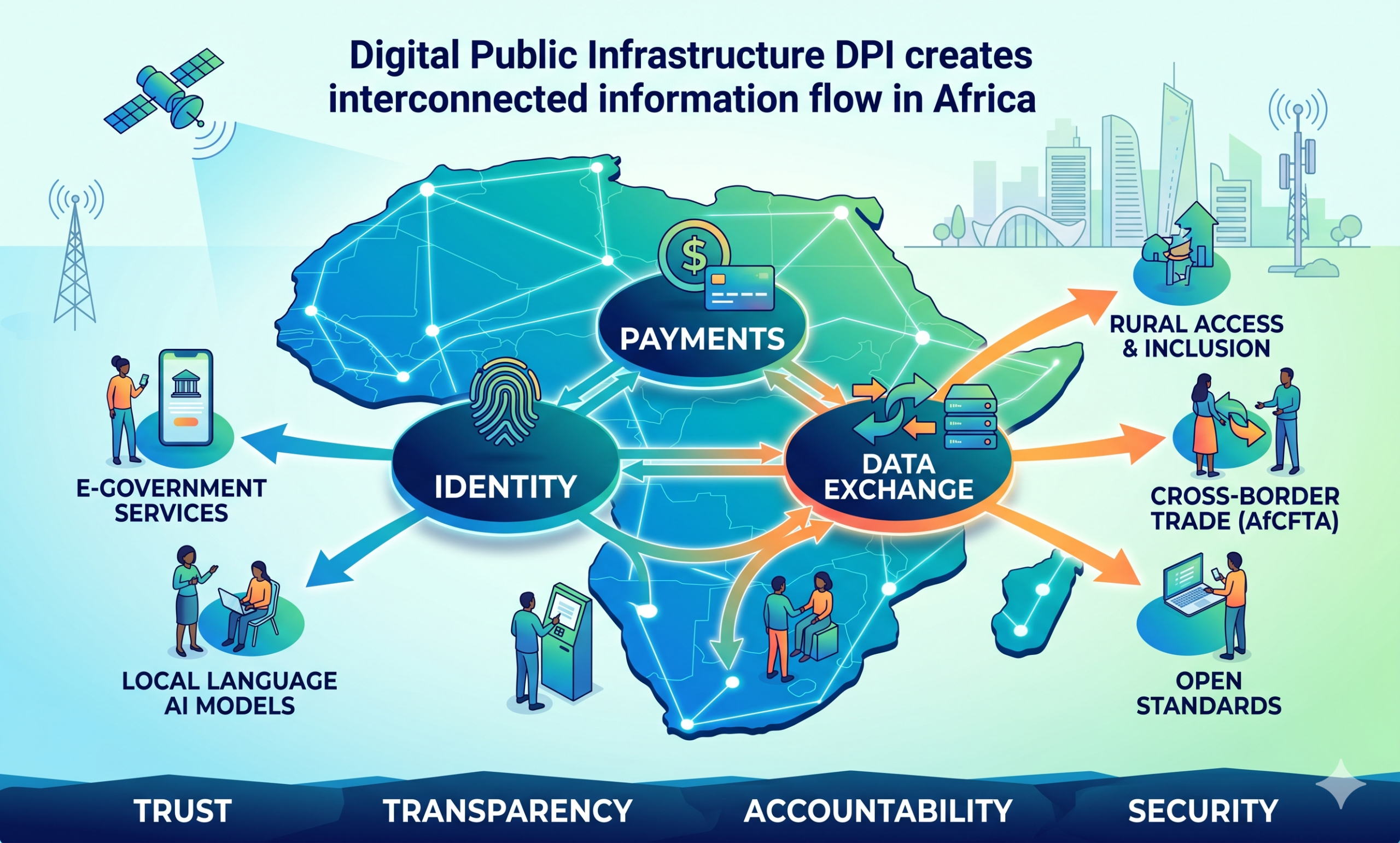
Kenya has emerged as a leader in the adoption of Digital Public Infrastructure (DPI) in Africa. By integrating technology into key public services, the country is accelerating socio-economic growth and improving access to essential services. This article provides an overview of Kenya’s digital public infrastructure landscape and the key elements shaping it.
Digital Identity Systems
DPI is built around three core pillars: Digital Identity Systems, Digital Payment Systems, and ICT Infrastructure. Kenya has taken great strides in the development of digital identity systems, which has, in turn, increased access to public services for the country’s citizens. Below are the different digital identity systems available in Kenya and their features.
Huduma Namba (National Integrated Identity Management System – NIIMS): Huduma Namba is a comprehensive digital identification system that integrates and harmonizes all government identification databases into a single platform. It enhances service delivery, reduces fraud, and improves efficiency in accessing government services. This service is a good example of Kenya’s digital public infrastructure.
Integrated Population Registration System (IPRS): IPRS is a centralized database that consolidates information from various civil registration systems. It enhances the accuracy and reliability of population data, supporting better planning and resource allocation.
Mobile Network Subscriber Registration: Mobile network operators in Kenya are required to register all subscribers using their national ID or passport numbers. This initiative enhances security in telecommunications and financial transactions and helps in tracking criminal activities.
Digital Payment Systems
Digital payment systems, another DPI component, are platforms that enable the seamless and secure execution of digital financial transactions. Below are some of the digital payment systems available in Kenya and how they impact the lives of citizens.
M-Pesa: M-Pesa was launched by Safaricom in 2007. It is a mobile money transfer service that allows users to send and receive money, pay bills, and access microfinance. It has brought banking services to millions of unbanked and underbanked individuals and has facilitated business transactions and economic activities.
Airtel Money: Airtel Money is Airtel Kenya’s mobile money service, providing similar functionalities to M-Pesa. As an alternative to M-Pesa, its existence fosters a competitive market, which is to the benefit of Kenyans. The service is also available to Airtel subscribers.
Equitel: Equitel is a mobile banking service by Equity Bank that seamlessly integrates banking and telecom services. The service helps expand financial services to the rural and underserved areas of Kenya.
T-Kash: Telkom Kenya’s mobile money service offers various digital financial services. The service adds diversity to the mobile money market in the country and continuously seeks to reach more Kenyans, particularly in rural areas.
PesaLink: PesaLink is a real-time interbank money transfer service developed by the Kenya Bankers Association. PesaLink streamlines interbank transfers and improves transaction efficiency. It also offers a competitive alternative to traditional banking methods.
EazzyPay: A digital payment solution by Equity Bank that allows users to pay for goods and services using their mobile phones. Equitel simplifies the payment process for both consumers and businesses and encourages the use of digital payments across different sectors.
JamboPay: It’s a digital payment gateway that facilitates online payments for various services, including government services. JamboPay enhances the efficiency of government revenue collection and supports the growth of online businesses.
Connectivity and ICT Infrastructure
Connectivity and ICT infrastructure is yet another component of DPI and, like the other components, the Kenyan government is making progress in this sector. Below are the avenues by which this is happening.
National Optic Fiber Backbone Infrastructure (NOFBI): This project aims to connect all 47 counties in Kenya with high-speed internet, promoting digital inclusion. It supports the provision of e-government services and the growth of the digital economy.
Konza Technopolis: Also known as Silicon Savannah, this is a flagship project aimed at creating a smart city focused on technology and innovation. It’s expected to drive significant economic growth and job creation in the ICT sector.

E-Government Services
E-government services also contribute to a nation’s digital public infrastructure as they democratize access to public services for its citizens. Kenya has numerous e-government services that improve access to essential societal functions for its citizens, including the following:
eCitizen Portal: eCitizen is the flagship digital platform for accessing government services online. It streamlines access to government services, reduces bureaucratic delays, and improves convenience for citizens. With the eCitizen Portal, citizens can register their businesses, apply for driver’s licenses, request birth certificates, conduct land searches, and many more. Furthermore, the platform facilitates online payments for various government services and fees.
Huduma Kenya: Huduma Kenya is a program aimed at providing integrated government services, such as ID applications, National Hospital Insurance Fund registration, National Social Security Fund services, and police abstracts at a single location or online. It enhances service delivery, reduces the need for multiple visits to different government offices, and increases efficiency. With over 50 centers across the country, Huduma Kenya is transforming service delivery to Kenyans.
IFMIS (Integrated Financial Management Information System): IFMIS is an automated system used by the government for public financial management. This system improves financial management, enhances transparency, and reduces corruption in government financial operations. It also streamlines the procurement process, ensuring transparency and accountability.
NTSA (National Transport and Safety Authority) TIMS (Transport Integrated Management System): TIMS is an online platform by NTSA for managing transport-related services. It simplifies transport-related processes, reduces the need for physical visits to NTSA offices, and enhances road safety management. For instance, it provides Kenyans the opportunity to register and transfer vehicle ownership online.
KRA iTax: iTax is an online platform by the Kenya Revenue Authority (KRA) for tax administration. With it, Kenyans can register for their Personal Identification Number (PIN) and submit their tax returns online. The platform also enables the monitoring of tax compliance, as well as the issuance of compliance certificates. In summary, the iTax platform increases tax compliance, simplifies tax filing processes, and enhances revenue collection efficiency for the organization.
MyGov Portal: MyGov is an online portal that provides access to government news, policies, and public notices. It also facilitates public engagement and feedback on government initiatives and policies, thereby enhancing transparency and public participation in governance.
NEMIS (National Education Management Information System): NEMIS is an online platform for managing education data in Kenya. The platform enables digital registration and racking of students in schools. Furthermore, it allows Kenya’s education authorities to track student performance and school management. As a result of these features, the NEMIS platform improves efficiency in the education sector, ensures accurate data management, and enhances resource allocation.
Digital Education
The Kenyan government is also expanding its DPI footprint through the provision of digital education to its citizens. Below are the different initiatives by which it accomplishes this.
Digital Literacy Programme (DLP): Launched in 2016, the DLP seeks to integrate ICT into teaching and learning in schools across Kenya. Among other things, the program has led to the development of digital content aligned with the natural curriculum, and to capacity building for teachers to use digital tools effectively. The DLP program has also led to the distribution of over one million devices to primary schools, thereby improving student engagement and interactive learning in Kenyan schools.

Cybersecurity and Data Protection
Cybersecurity and data protection are another manifestation of DPI. Without a robust cybersecurity and data protection framework, a country’s entiredigital infrastructure is at risk to bad players. Below are the different ways by which the Kenyan government is trying to ensure a robust cybersecurity and data protection sector.
Computer Misuse and Cybercrimes Act, 2018: This is the primary legislation addressing cybersecurity in Kenya. It outlines offenses related to computer misuse and cybercrimes, such as unauthorized access, cyber espionage, cyber harassment, and identity theft. The Act also establishes the National Computer and Cybercrimes Coordination Committee to oversee its implementation and enforcement.
National Cybersecurity Strategy, 2022: This strategy aims to enhance Kenya’s cyber resilience and secure the nation’s critical infrastructure. It focuses on capacity building, collaboration, and public awareness to combat cyber threats.
Kenya Information and Communications Act (KICA): This act, along with its amendments, governs electronic transactions, cyber activities, and the overall information and communication technology sector. It includes provisions related to cybersecurity to ensure the protection of ICT infrastructure and data.
Data Protection Act, 2019: This act aligns with international standards, such as the EU’s General Data Protection Regulation (GDPR). It sets out principles for data processing, the rights of data subjects, and the obligations of data controllers and processors. Its key aspects include the following:
- Data Subject Rights – Individuals have the right to access, correct, and delete their personal data.
- Data Processing Principles – Data must be processed lawfully, transparently, and for specific, legitimate purposes.
- Data Protection Officer – Organizations processing significant amounts of personal data are required to appoint a Data Protection Officer.
- Cross-border Data Transfers – The act regulates the transfer of personal data outside Kenya to ensure it receives adequate protection.
Office of the Data Protection Commissioner (ODPC): This office is responsible for overseeing the implementation of the Data Protection Act, handling complaints, and ensuring compliance.
Innovation and Entrepreneurship
The Kenyan government supports innovation and entrepreneurship, as part of its efforts to build a robust digital public infrastructure. Below are examples of how it is doing this.
iHub: A leading tech incubator and co-working space in Nairobi that has supported numerous startups and tech initiatives. It plays a crucial role in nurturing innovation and fostering a vibrant startup ecosystem.
Startups and Fintechs: Kenya boasts a dynamic startup scene, particularly in fintech, with companies like Tala, Branch, and M-Kopa leading in digital lending, mobile banking, and pay-as-you-go solar solutions.
Regulatory Framework and Policy
Finally, a country cannot have an effective digital public infrastructure without accompanying regulatory frameworks and policies that guide it.
Kenya Vision 2030: The country’s development blueprint emphasizes the role of ICT in achieving socio-economic transformation. It includes plans for expanding digital infrastructure, enhancing digital skills, and promoting innovation.
Communications Authority of Kenya (CA): The regulatory body overseeing ICT and telecommunications in Kenya. It ensures fair competition, consumer protection, and the development of a robust ICT sector.
Conclusion
Kenya’s digital public infrastructure embrace is setting the stage for transformative growth. While challenges such as cybersecurity and digital inclusion remain, the opportunities for innovation and digital-driven development are immense. With continued investment, Kenya is poised to become a digital leader in Africa.