Africa’s Digital Public Infrastructure (DPI) story is entering a new chapter. For years, conversations focused on identity rails and payment systems — the foundations that 40+ countries have been quietly building. That phase is nearly done.
What comes next is far more powerful: how governments, innovators, and citizens use these rails to transform essential services.
From 2026 to 2030, three sectors will define Africa’s next DPI sprint — health, education, and climate adaptation. In each one, DPI has shifted from an efficiency tool to the only scalable way to deliver services to hundreds of millions of people.
1. Health: From digital certificates to lifelong health wallets
Africa’s DPI health journey began with a quiet milestone in 2021, when Tanzania became the first country globally to issue WHO-compliant digital vaccine certificates using MOSIP and Divoc. By 2025, twelve countries — including Rwanda, Ghana, Kenya, Nigeria, and Morocco — had interoperable digital health-pass systems in place.
But the real transformation is unfolding now.
Mozambique and Benin used MOSIP + OpenG2P to deliver epidemic-response cash support to 2.8 million people within 72 hours during flood and cholera alerts.
Rwanda’s Community Health Information System now gives every citizen a lifelong health wallet — a secure credential storing antenatal records, vaccination history, HIV status (with consent), and insurance eligibility, all tied to national ID.
Nigeria is piloting zero-knowledge maternal-health passports, enabling women to prove antenatal attendance without revealing personal details.
By 2030, at least 18 African countries will have citizen-controlled digital health records. The impact is already visible: maternal mortality has dropped 15–20% in Rwanda and Ghana’s early pilots, insurance underwriting is becoming more efficient, and continent-wide disease surveillance is finally possible without paper.
This is health delivery at scale — citizen-centered, privacy-preserving, and built on African-led DPI.
2. Education: The beginning of a post-paper credential era
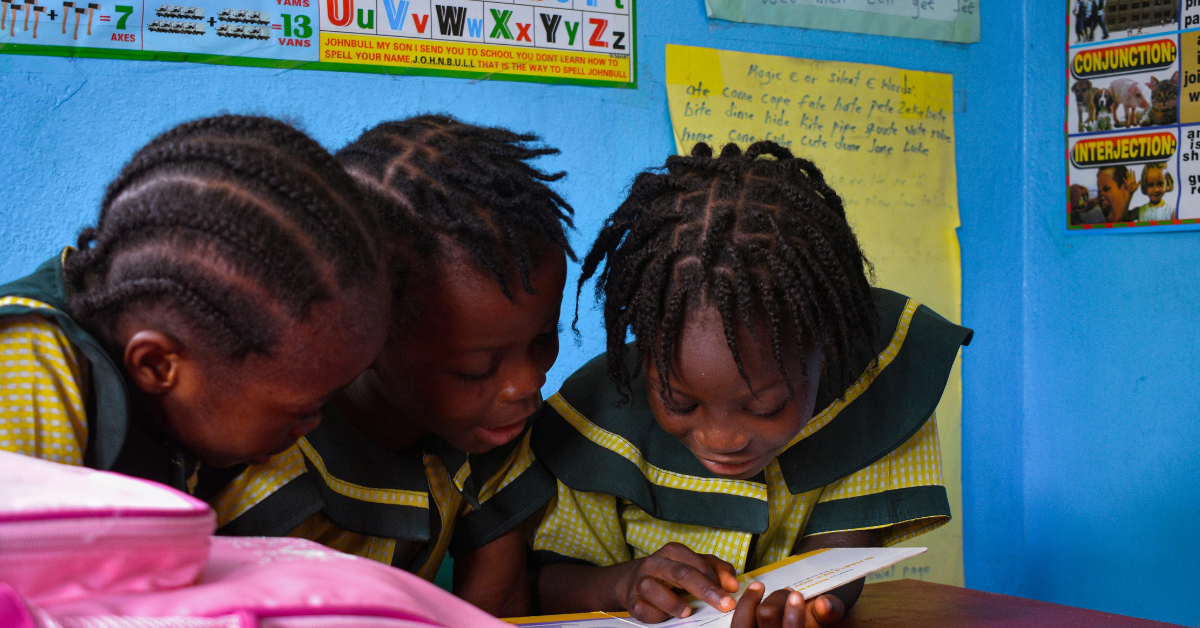
Across Africa, millions of students lose opportunities because verifying paper certificates can take months — or even years. Nigeria once faced an 18-month backlog for WAEC and JAMB verification.
DPI is rewriting this story.
Rwanda introduced digital learner IDs in 2023, and every national exam since then is issued as a verifiable, tamper-proof credential.
Ghana and Benin roll out digital credential wallets for WASSCE and the Baccalauréat in 2026.
Nigeria quietly signed a federal contract in 2025 to ensure all JAMB and NECO results from 2026/27 onward are cryptographically signed at birth.
The results are striking:
Universities in Côte d’Ivoire and Kenya report a 60–80% drop in credential fraud.
Employers — from MTN to public service agencies — have cut onboarding time from weeks to days.
The African Union now positions interoperable digital credentials as the backbone of its 2025–2035 Continental Qualifications Framework.
By 2030, at least fifteen African countries will treat the paper certificate as a relic. A student will share verified results with any university or employer worldwide — no courier, no bribe, no delay.
DPI is giving young Africans what they have long deserved: instant credibility in a digital global economy.
3. Climate adaptation: Paying farmers before the crops die
For African farmers, climate change is not tomorrow’s threat — it is today’s reality. Moving adaptation funding quickly and transparently has always been the challenge. DPI just solved that last mile.
In Kenya, Pula and IBISA used satellite data + national ID + mobile money to pay $22 million in parametric drought insurance to 1.4 million farmers between 2024–2025 — often within 48 hours of a trigger.
Ethiopia scaled the model to 8 million smallholders under the Productive Safety Net Programme. Payments hit phones automatically when rainfall indices fall.
In Madagascar and Niger, Oxfam and WFP used OpenG2P + MOSIP to deliver anticipatory cash transfers 10–14 days before predicted floods.
The next five years will accelerate this momentum:
The African Risk Capacity aims to insure 100 million people by 2030 — a goal only achievable through DPI.
The African Development Bank’s $1.5 billion Climate Risk Insurance Facility requires all participating countries to have functional digital ID and payment systems.
This is climate adaptation designed for Africa: fast, data-driven, transparent, and built around the realities of rural life.
The common thread: portable, privacy-preserving credentials
The transformation in all three sectors is driven by one leap: the shift from centralized databases to verifiable, citizen-controlled credentials.
Soon, a Kenyan farmer will carry a digital wallet that can selectively prove:
land-ownership rights
insurance eligibility
a child’s vaccination status
secondary-school completion
All without revealing unnecessary personal data. No ministry needs to pick up a phone. No office needs a stamp. The citizen decides what to share — and cryptography does the rest.
Where Africa will be by 2030
By the end of the decade, 15–25 African countries are likely to have interoperable DPI layers spanning:
health
education
social protection
climate finance
The phone that once only sent M-Pesa notifications will become a single gateway to lifelong public services, controlled by the individual — not the state or private companies.
Phase one of African DPI was about connecting people to systems.
Phase two is about giving people power inside those systems.
This is not just infrastructure.
This is agency. This is dignity. This is Africa building digital systems on its own terms.