As the world advances into the Digital Age, the importance of Digital Public Infrastructure (DPI) in Africa cannot be overstated. DPI encompasses the foundational digital systems and services that facilitate efficient public service delivery, enhance economic growth, and foster greater inclusivity. This article explores why DPI is crucial for Africa and how it can address the continent’s unique socio-economic challenges.
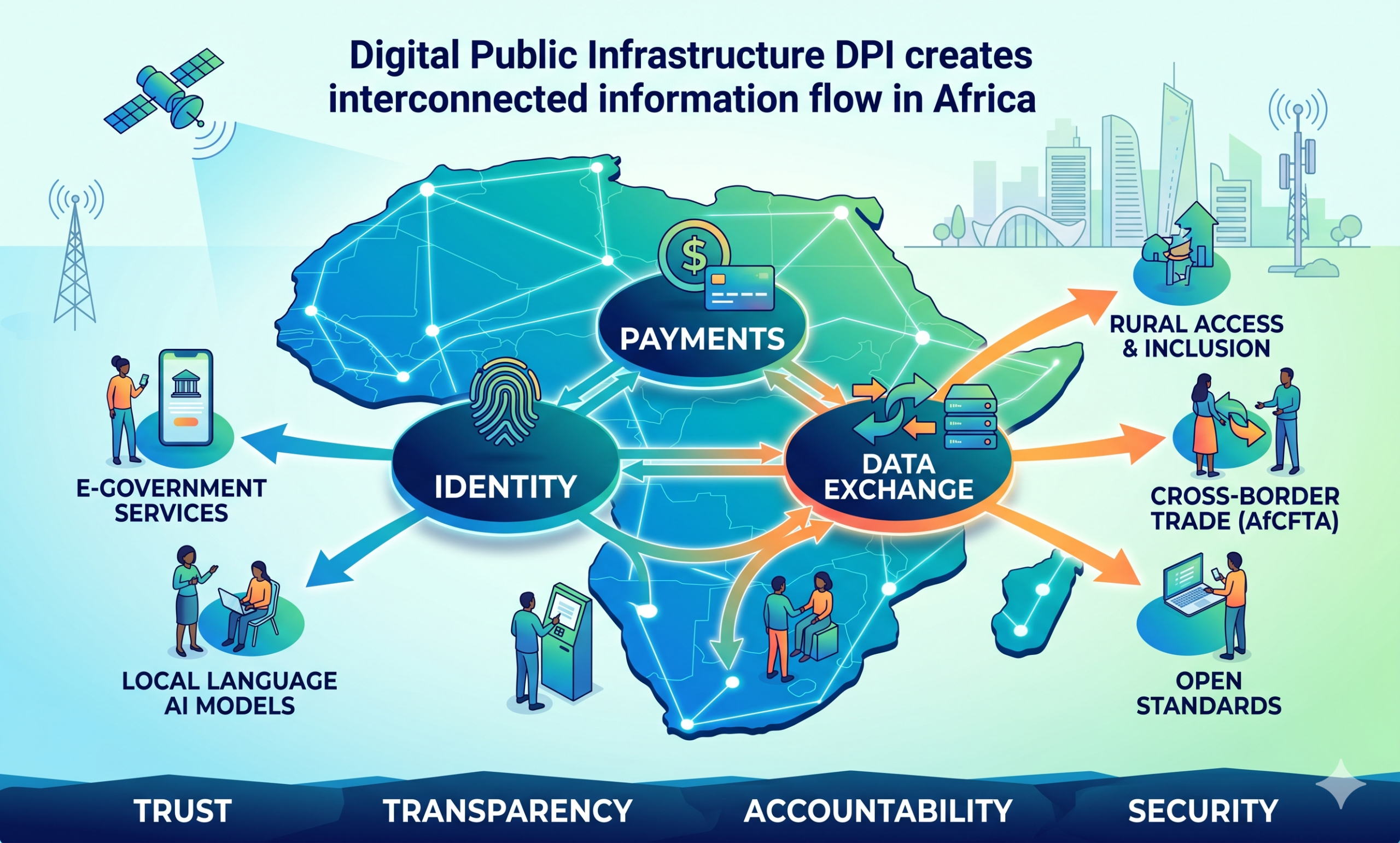
Digital Public Infrastructure refers to the essential digital frameworks that support the functioning and delivery of public services. This includes digital identification systems, e-governance platforms, digital financial services, public internet access points, and more. DPI is instrumental in improving accessibility, transparency, and efficiency in public administration. It also plays a vital role in supporting economic growth by providing a robust digital backbone that facilitates seamless interactions between citizens, businesses, and governments.
For Africa, where traditional infrastructure often falls short due to vast rural areas, diverse populations, and socio-economic challenges, DPI offers a transformative solution. It can bridge service delivery gaps, promote financial inclusion, improve healthcare and education, and drive sustainable development.
Digital Identification Systems: Digital IDs provide a secure and verifiable means of identifying individuals, which is crucial for accessing various public and private services. In Africa, where many people lack formal identification, digital IDs can help improve access to banking, healthcare, education, and social services. They also enhance government efficiency by reducing fraud and ensuring that benefits reach the right people.
E-Governance Platforms: E-governance platforms enable governments to deliver services online, reducing the need for physical visits to government offices. This improves efficiency and transparency while making services more accessible to citizens. For example, online portals for tax filing, business registration, and social services applications can save time and reduce bureaucratic delays.
Digital Financial Services: Digital financial services, such as mobile banking and e-wallets, have transformed the financial landscape in Africa. These services provide convenient and secure ways to conduct transactions, save money, and access credit. They also promote financial inclusion by bringing banking services to unbanked and underbanked populations.
Public Internet Access Points: Providing public internet access points, especially in rural areas, can help bridge the digital divide. These access points enable people to connect to the internet, access information, and use digital services. They also support educational and entrepreneurial activities, contributing to local development.
In summary, DPI is a cornerstone of Africa’s digital transformation. By investing in digital infrastructure and services, African countries can create more inclusive and efficient societies, driving sustainable development and improving the quality of life for their citizens.