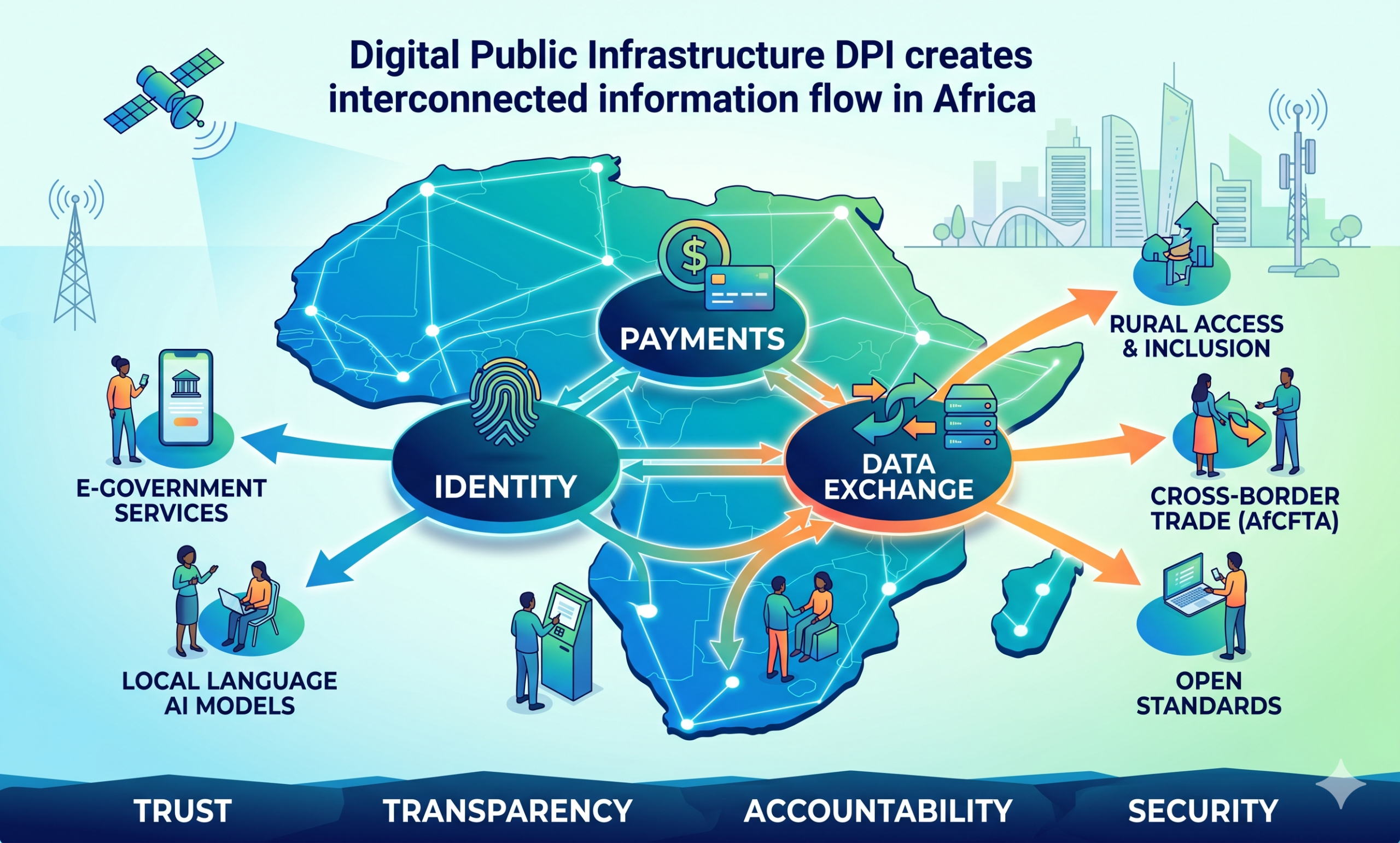
Several African countries have made significant strides in developing and implementing Digital Public Infrastructure (DPI). These efforts highlight the continent’s potential and the benefits of embracing digital transformation. This article examines the current state of DPI in Africa, showcasing notable initiatives and their impacts.
Kenya stands out with its pioneering efforts in digital financial services, particularly through the M-Pesa mobile money platform, which has revolutionized financial inclusion. Launched in 2007, M-Pesa allows users to deposit, withdraw, transfer money, and pay for goods and services using their mobile phones. It has become a vital financial tool for millions of Kenyans, especially those without access to traditional banking services. The Huduma Namba initiative, aimed at providing a unique identification number for all citizens, further exemplifies Kenya’s commitment to enhancing public service delivery. This digital ID system is designed to streamline access to government services, reduce fraud, and improve the efficiency of public administration.
Rwanda has made remarkable progress with its Vision 2020 program, transforming the nation into a knowledge-based economy. The Irembo platform, launched in 2015, offers citizens online access to various public services, including birth certificates, driving licenses, and business registration. By digitizing these services, the Rwandan government has reduced bureaucratic inefficiencies and improved service delivery. Rwanda’s focus on technology and innovation has also attracted significant investment in its ICT sector, positioning the country as a regional technology hub.
Nigeria is leveraging digital technologies to improve governance and service delivery. The National Identity Management Commission (NIMC) is working on issuing digital IDs to citizens, which are crucial for accessing a range of public and private services. Nigeria’s digital ID initiative aims to provide a unique identification number to every citizen, facilitating access to banking, healthcare, education, and social services. Additionally, the country’s government is investing in digital platforms to enhance transparency and efficiency in public administration. For example, the Treasury Single Account (TSA) system consolidates all government revenues into a single account, reducing corruption and improving financial management.
South Africa is at the forefront of using digital technologies to improve public health services. The country’s electronic health records system and telemedicine initiatives have significantly enhanced healthcare access, especially in remote areas. Telemedicine enables patients to consult with doctors remotely, reducing the need for travel and increasing access to healthcare services. South Africa’s focus on digital health is part of a broader effort to modernize its healthcare system and improve health outcomes for its population.
These examples demonstrate how DPI can drive positive change and development across the continent, providing a model for other African nations to follow. By investing in digital infrastructure and services, African countries can improve public service delivery, promote economic growth, and enhance the well-being of their citizens.