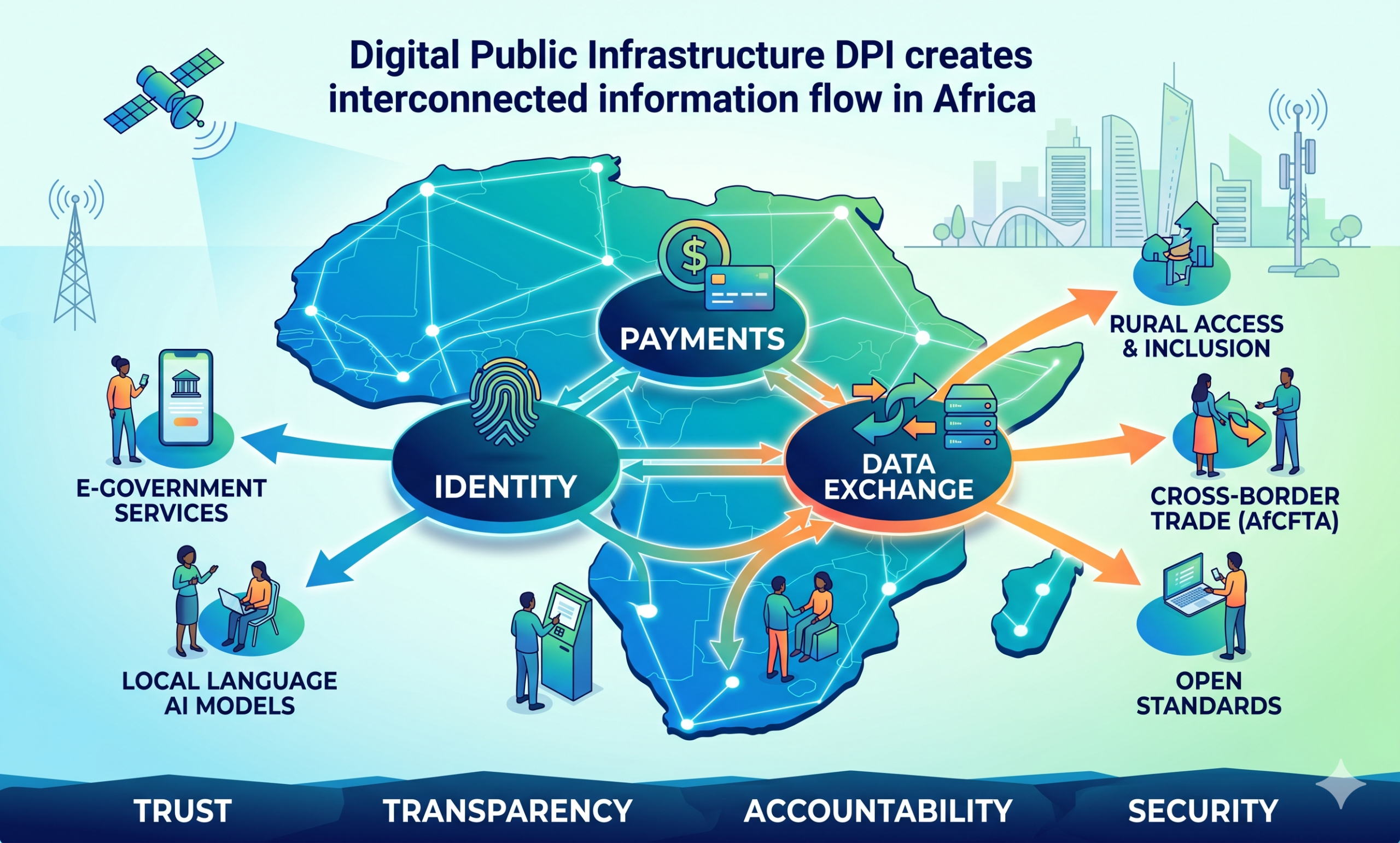
As Africa continues to embrace the Digital Age, Artificial Intelligence (AI) is emerging as a key component in enhancing Digital Public Infrastructure (DPI). AI has the potential to revolutionize the way public services are delivered, improve governance, foster economic growth, and drive sustainable development across the continent.
Artificial Intelligence refers to the simulation of human intelligence processes by machines, especially computer systems. These processes include learning, reasoning, and self-correction. In the context of DPI, AI can be applied to various domains to optimize operations, enhance service delivery, and improve decision-making processes.
Digital Identification Systems: AI can enhance the accuracy and efficiency of digital identification systems by leveraging biometric technologies such as facial recognition, fingerprint scanning, and iris recognition. These technologies can ensure secure and reliable identification, reducing fraud and enabling more people to access public services.
E-Governance Platforms: AI-powered chatbots and virtual assistants can improve citizen engagement by providing instant responses to inquiries and assisting with the completion of forms and applications. Additionally, AI can analyze large datasets to identify patterns and trends, helping governments make informed policy decisions.
Digital Financial Services: AI-driven analytics can help financial institutions assess creditworthiness, detect fraudulent activities, and personalize financial products for customers. This can increase financial inclusion by providing tailored services to underserved populations.
Public Internet Access Points: AI can optimize network management and ensure efficient allocation of bandwidth, improving internet connectivity and access. AI can also be used to monitor and maintain public Wi-Fi networks, ensuring they remain operational and secure.
Opportunities for AI in DPI
The integration of AI into DPI presents numerous opportunities for Africa, including:
- Enhanced Public Service Delivery: AI can streamline and automate administrative processes, reducing the time and effort required to deliver public services. For example, AI can process and analyze large volumes of data to identify citizens eligible for social benefits, ensuring timely and accurate distribution.
- Improved Healthcare Services: AI-powered diagnostic tools can assist healthcare professionals in diagnosing diseases and recommending treatment plans. Telemedicine platforms equipped with AI can provide remote consultations and monitor patients’ health conditions, increasing access to healthcare in remote areas.
- Educational Advancements: AI can personalize learning experiences by adapting educational content to individual students’ needs and learning styles. This can enhance the quality of education and ensure that all students receive the support they need to succeed.
- Economic Growth and Job Creation: AI can drive innovation and create new job opportunities in various sectors, including technology, finance, healthcare, and education. By fostering a culture of innovation, AI can stimulate economic growth and development.
- Improved Governance and Transparency: AI can enhance transparency and accountability in public administration by detecting anomalies and irregularities in government transactions and processes. This can reduce corruption and improve the efficiency of governance.
Challenges of Implementing AI in DPI
Despite the potential benefits, several challenges must be addressed to effectively integrate AI into DPI in Africa:
- Digital Divide: Many regions in Africa still lack the necessary infrastructure and connectivity to support AI technologies. Bridging the digital divide is crucial to ensure that all citizens can benefit from AI-driven DPI services.
- Data Privacy and Security: The implementation of AI involves collecting and analyzing vast amounts of data, raising concerns about data privacy and security. Robust data protection regulations and cybersecurity measures are essential to safeguard citizens’ information.
- Digital Literacy: Low levels of digital literacy can hinder the adoption of AI technologies. Educating citizens about AI and its benefits is essential to ensure widespread acceptance and use.
- Ethical Considerations: The use of AI raises ethical questions about bias, fairness, and accountability. Developing ethical guidelines and frameworks is crucial to ensure that AI technologies are used responsibly and for the benefit of all.
- Regulatory Frameworks: Inconsistent or outdated regulatory frameworks can impede the development and implementation of AI technologies. Policymakers must create and enforce regulations that support AI innovation while protecting citizens’ rights.
Artificial Intelligence has the potential to transform Digital Public Infrastructure in Africa, enhancing public service delivery, improving governance, and driving economic growth. By addressing the challenges and leveraging the opportunities presented by AI, African countries can build resilient, inclusive, and efficient societies.
It is crucial for governments, private sector players, and civil society to collaborate and ensure that AI benefits all citizens. The integration of AI into DPI is not just about technology; it is about creating a better, more inclusive future for everyone. By embracing AI and investing in digital infrastructure, Africa can unlock its full potential and achieve sustainable development for all.