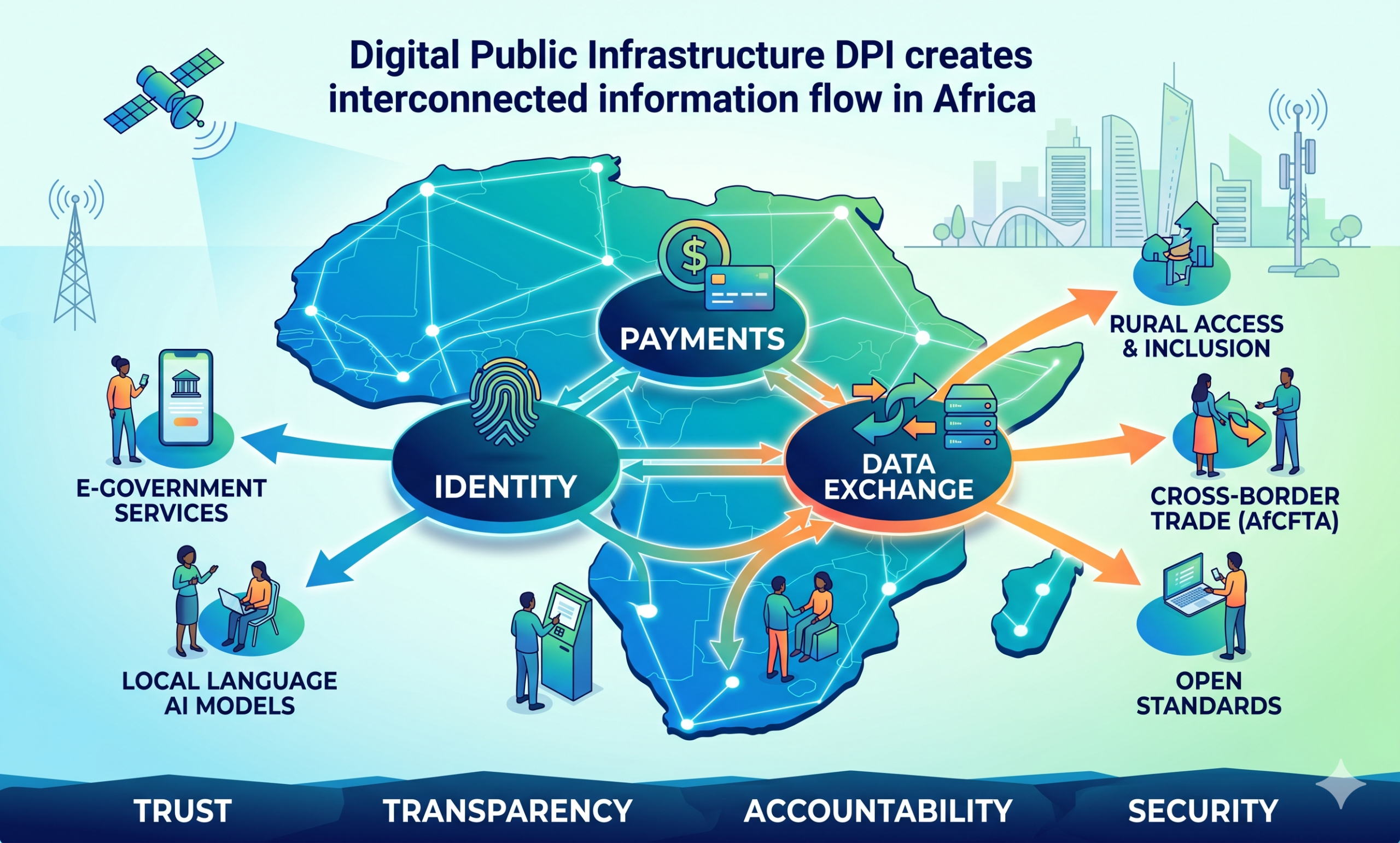
Despite the challenges, the opportunities for Digital Public Infrastructure in Africa are immense. By leveraging digital technologies, African countries can address many of their socio-economic issues and unlock new avenues for growth and development. This article explores the key opportunities presented by DPI.
- Economic Growth and Job Creation: DPI can drive economic growth by fostering innovation, entrepreneurship, and job creation. Digital platforms can provide new business opportunities, particularly for small and medium-sized enterprises (SMEs). By enabling digital transactions and expanding market access, DPI can stimulate economic activity and create jobs. For example, e-commerce platforms allow businesses to reach a wider audience, while digital payment systems facilitate seamless transactions.
- Improved Governance and Service Delivery: E-governance platforms can enhance transparency, accountability, and efficiency in public administration. This can lead to better service delivery and increased citizen engagement. Digital tools can streamline government processes, reduce corruption, and improve the responsiveness of public services. For instance, online portals for tax filing, business registration, and social services applications can save time and reduce bureaucratic delays.
- Financial Inclusion: Digital financial services, such as mobile banking and e-wallets, can provide financial access to the unbanked population. This can empower individuals and boost economic participation. By offering secure and convenient financial services, DPI can help reduce poverty and promote inclusive growth. Mobile money platforms, like M-Pesa, have already demonstrated the transformative potential of digital financial services in Africa.
- Healthcare and Education: DPI can significantly improve healthcare and education services. Telemedicine can increase access to healthcare in remote areas, while online education platforms can provide learning opportunities to underserved populations. Digital tools can enhance the quality and reach of these essential services, contributing to human development. For example, telemedicine allows patients to consult with doctors remotely, while online learning platforms offer educational resources to students in rural areas.
- Regional Integration: Harmonizing DPI initiatives across African countries can promote regional integration and cooperation. This can lead to shared resources, knowledge, and infrastructure, benefiting the continent as a whole. By working together, African nations can build a more connected and prosperous region. Regional organizations, such as the African Union, can facilitate collaboration and support the development of cross-border digital infrastructure projects.
By capitalizing on these opportunities, African countries can build resilient, inclusive, and efficient societies. Continued investment in DPI, coupled with supportive policies and regulations, can drive the continent towards a prosperous digital future.
As Africa embarks on this digital journey, it is crucial for governments, private sector players, and civil society to collaborate and ensure that DPI benefits all citizens. The digital revolution is not just about technology; it is about creating a better, more inclusive world for everyone. By embracing digital transformation, Africa can unlock its full potential and achieve sustainable development for all.